
New Research Highlights the Impact of Women’s Sheds Across Ireland
A new research project, “Evaluation of Women’s Sheds in Ireland: A Participatory and Ecological Approach”, is exploring the important role Women’s Sheds play in supporting women, strengthening communities and improving wellbeing across Ireland.
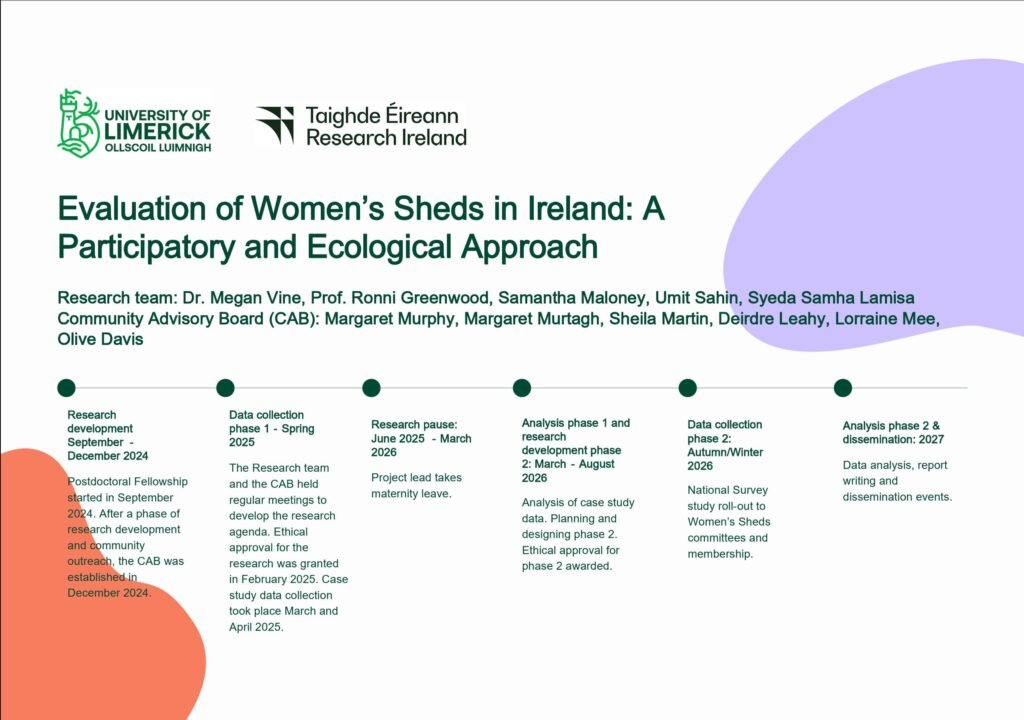
Led by Dr Megan Vine and Prof Ronni Greenwood at the University of Limerick and a community advisory board of women with experience of Women’s Sheds at all levels, the two -year project is funded by Taighde Eireann (Research Ireland).

The research looks at the experiences of Women’s Shed members, committees and wider community stakeholders, and aims to demonstrate the impacts of Sheds at individual, organisational and community levels.
Women’s Sheds have grown significantly across Ireland over the past 15 years, with up to 140 now established. The strong growth of Sheds post-pandemic highlights their role in meeting communities’ needs for in-person connection and a sense of purpose and belonging. Women’s Sheds are created from the grassroots by ordinary women, and are shaped by the skills, needs and interests of their members. As such, every Shed is different, however activities may include arts and crafts, exercise, singing, wellbeing classes and talks, trips and skills sharing.
Four key findings from the research so far:
The first phase of the research involved case studies four Women’s Sheds, with 58 participants taking part in focus groups, interviews and observations. The data were thematically analysed, and four key findings were identified:
- Sheds provide a lifeline for women
For many members, their Shed offers a vital source of connection and support, helping to reduce loneliness and social isolation, particularly during challenging life experiences such as bereavement, illness, retirement or relocation. Members also reported improvements in their mental wellbeing, confidence and overall health.
- Sheds create lasting friendships and support networks
Women’s Sheds provide welcoming spaces where women can build friendships, share experiences and support one another emotionally and practically. The research highlighted the importance of feeling valued, included and having a sense of belonging.
- Strong committees help Sheds thrive
Behind every successful Shed is a dedicated committee working to manage resources, organise activities and overcome challenges. However, committees also face difficulties, including limited access to suitable venues, funding and the capacity to support greater social inclusion.
- The impact reaches far beyond the Shed itself
Women’s Sheds are making a wider contribution to their communities through volunteering, fundraising, partnerships with other groups and local projects. They also help challenge perceptions of women’s roles and highlight the valuable contributions women make to society.
Importance of the research
The research highlights the importance of recognising and investing in Women’s Sheds as valuable community wellbeing settings, not simply places where activities take place.
Key recommendations include providing sustainable funding and suitable venues, strengthening committee and volunteer support, improving opportunities for inclusion, and developing stronger national representation for the Women’s Shed movement that works in collaboration with grassroots networks.
What’s next?
Data collection for this project is now in its second phase, with the National Survey of Women’s Sheds and Groups being rolled out to 67 groups in November/December 2026. A full report including case study and survey findings is planned for Summer 2027, and will be made available to Women’s Shed stakeholders, in combination with other dissemination events.
Get in touch
Please email Dr. Megan vine: megan.vine@ul.ie if you have any questions regarding the research, or you can follow updates on the research through the project Facebook page: @TheWomensShedProject
Learn More
Findings from phase 1 of the research were presented at the British Psychological Society Community Psychology Festival in Plymouth on the 17th of October 2026 – you can access the research posters here: